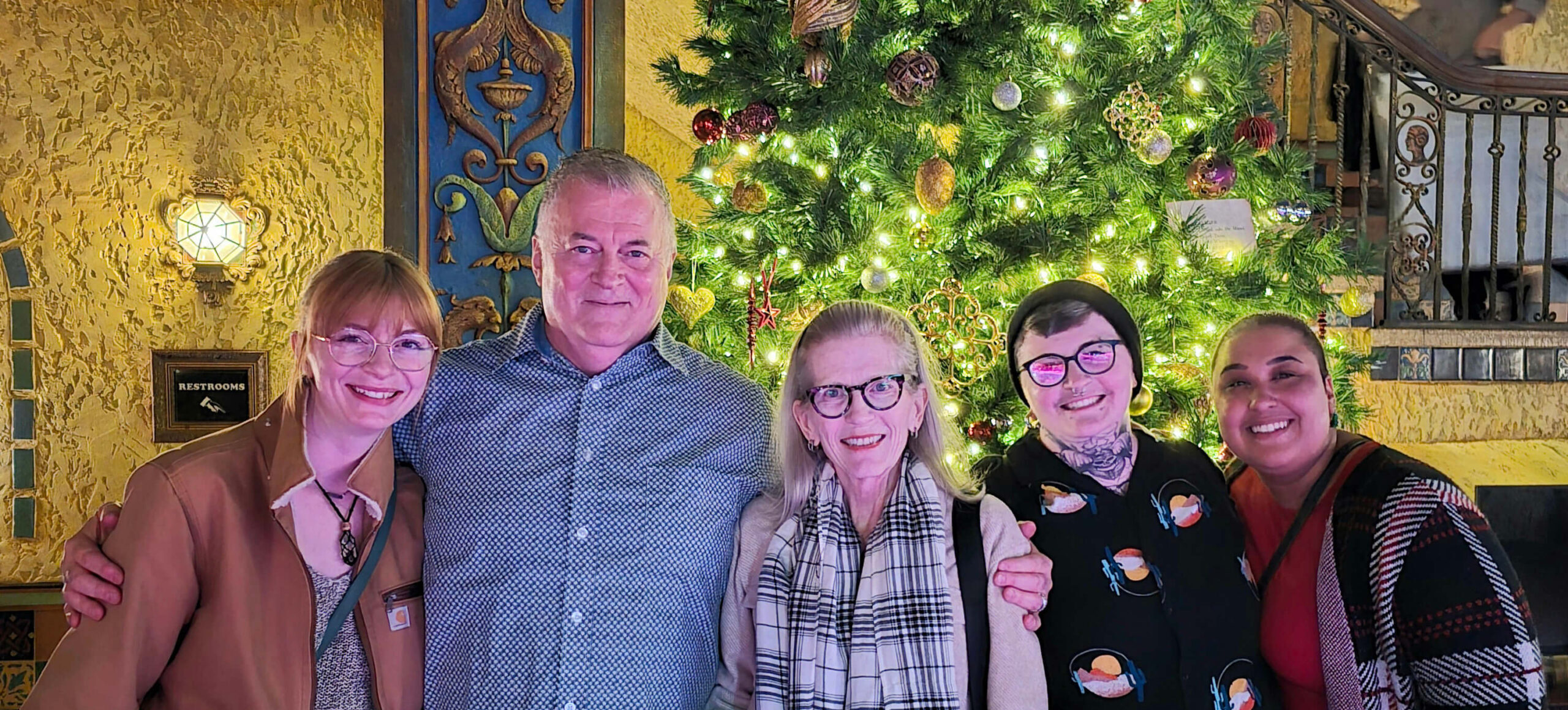
LEMS Ambassadors are compensated by Catalyst Pharmaceuticals, Inc. for the time they spend
discussing their experiences with LEMS.
The holiday season has always been important to me and my family. We’d all come over to the family home, decorate the Christmas tree, and bake some treats. But when you have Lambert-Eaton myasthenic syndrome (LEMS), even these simple things can change. You might not have the endurance to help with the Christmas tree; you might not be able to eat those special holiday meals; even the home you once hosted people in might’ve changed to accommodate your needs and treatment plan. But just because things are different doesn’t mean they’re bad. With a rare disease like LEMS, it can be hard to know how other patients are coping or what they’re experiencing, and purely medical advice doesn’t help with that. But the holidays aren’t a time to be alone, so I want to offer some advice to help and give you hope to enjoy everything the season has to offer.
Give Yourself Time to Adjust
Most of LEMS’s symptoms are physical, but when it comes to the holidays, I’ve found the biggest hurdle to be emotional. Those first few Christmases after my diagnosis were really hard. I used to love hosting and baking cookies, but I’d become fatigued so quickly that I’d just have to sit down and watch while everyone else cooked. My husband and children tried to make sure I didn’t feel left out, but I felt a sense of resignation. Because I’d given up physically, I gave up trying to participate, too. That made me feel even sadder about the situation.
But life is all about perspective, right? Over the years, I’ve learned that I can enjoy the holidays in a new way—even from a chair. Although I wish I could help put the tree up myself, it’s funny seeing how my husband and kids do it. I had never observed them like I can now—they’re so chaotic and messy! And that’s really where all the fun of the holidays lies, in enjoying your loved ones’ company in any way you can. It took me a few Christmases to see things this way, but I needed that time to adjust. Give yourself that time too—it’s all a learning process.
Learning to Let Your Loved Ones Help
Another big thing is learning to accept help from others. My independence means a lot to me, and I’ve lost some of it to LEMS. I always want to prep the house for guests during the holidays like I used to, but now, I lean on my husband. He is amazing, but…between us? Let’s just say the way he cleans is not the way I clean. I notice things in a heartbeat—the spot on the floor, the dust on the ceiling fan—but I’ve had to learn to appreciate that he’s helping. I am a detail-oriented person, and he’s a big picture person. So now I remember that the bigger picture is what really counts—nobody’s looking at the details like me. They’re just enjoying time with family.
Finding Where You Can Help
LEMS doesn’t keep me from being involved in everything we do as a family during the holidays, and I’ve been able to find what works for me over time. I used to love getting in the kitchen with everyone and cooking us treats. My favorite part was doing the fine details on the icing work. But now, I’ve got little usage of my dominant hand, so my icing decorations look a bit like someone let a kindergartener go nuts with crayons. Still, I’ve learned to enjoy the parts of the cooking I can do and to listen to my body on the day. The same is true throughout the holidays, whether it’s decorating the tree or just spending some time with the family. Now I know how to listen to my body—I know when it needs rest, and I respect that need.
Bierocks: My Family’s Favorite Holiday Meal
My family does a lot of baking during the holidays, but our favorite thing to make is a classic German dish called “bierocks”. It’s an old German treat that’s basically hamburger-stuffed rolls with onions and cabbage and lots of chopped sauerkraut. It might not sound like a lot, but once it’s all put together, it’s splendid. Although we lost our original recipe years ago, I’ve found a new one from Hunter Angler Gardener Cook that we like to tinker with. I don’t get to eat the bierocks anymore, since it’s better I don’t eat meat due to my LEMS, but getting to help bake the bierocks always makes the holidays feel like the holidays.
Ingredients
- 2 pounds pre-made pizza dough
- 1 pound hamburger meat
- 2 cups chopped cabbage
- 1 cup chopped sauerkraut
- 1 cup chopped onion
- 1 tablespoon mustard
- 2 tablespoons malt vinegar
- Salt and pepper
- 1⁄4 cup beer
- 1⁄2 cup shredded white cheese (optional)
- Butter or olive oil (for cooking meat)
- 2 eggs, lightly beaten (for brushing bierocks)
Instructions
- Make the filling. Cook cabbage, sauerkraut, and onion over medium high heat until softened. Stir in mustard, vinegar, and beer, and simmer until the liquid is gone. Season to taste. Turn off the heat and cool. Mix in with uncooked meat. Sprinkle in cheese (optional). Set in fridge to cool to room temperature.
- Preheat oven to 350°F and take filling out of fridge.
- Cut the dough and filling into eight equal pieces. Roll the pieces of dough into balls and then flatten them out. Add filling and then seal it with the dough, forming a flattened ball. Place all bierocks on a baking sheet, brushing each with the eggs.
- Bake for 25 minutes and cool before serving.
And dig in—unless you have LEMS like me. In which case, you can enjoy the smell and take credit for the good cooking. It’s like everything else with LEMS: You might not be able to enjoy holiday festivities like you did before, but with some time, you can learn appreciate the present moment in a new, refreshing way.
© 2025 Catalyst Pharmaceuticals, Inc. All Rights Reserved. LEM-0568-1 December 2025