Turning LEMS
knowledge
into strength
For people affected by Lambert-Eaton myasthenic syndrome (LEMS), understanding the challenges ahead is one key to moving beyond them.
Scroll


Information has the power to change lives.
LEMS Aware was created to deliver relevant information, resources, and connections to patients and caregivers who may be living with or affected by LEMS. Wherever you are on your journey—searching for the right doctor, the right diagnosis, or the right treatment—this site can guide you to that next milestone.
What is LEMS?
LEMS is a rare neuromusculara system in the body that includes nerve cells called neurons and the muscles they control disease that can have a profound effect on a person’s mobility and quality of life
In Lambert-Eaton myasthenic syndrome, also known as LEMS, the communication between nerves and muscles is disrupted. It is named after the two neurologists, Dr. Edward Lambert and Dr. Lee Eaton, who first identified the syndrome at the Mayo Clinic during the 1950s.
LEMS typically causes severe, debilitating, and progressive gradual worsening weakness in the upper legs and hips, making it difficult for a person to stand up from a chair, climb stairs, or walk. LEMS can also weaken the muscles of the upper arms and shoulders, making self-care and independence difficult. Some people with LEMS also experience other symptoms, such as dry mouth or problems with vision. You can learn more about all the symptoms of LEMS in the next section.
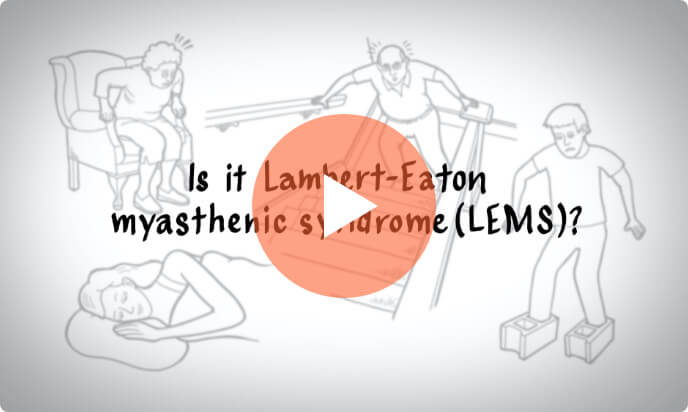
Is it LEMS?
Learn more about LEMS symptoms and how you can take charge of your health to get the proper diagnosis and treatment you need.
LEMS AND LUNG CANCER
LEMS occurs when a specific antibody disrupts the communication between the nerves and muscles in an area known as the neuromuscular junction (NMJ).
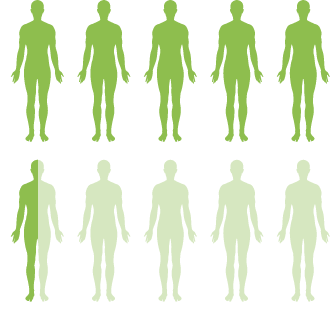
In 50%-60% of people with LEMS, this abnormal immune system attack is associated with the presence of an underlying cancer in the body—most often an aggressive type of lung cancer called small cell lung cancer (SCLC).
Learn more about how doctors screen LEMS patients for cancer and how it may be treated if there is a co-occurrence.
LEMS AND Pregnancy

Ready to explore and learn more about LEMS?

How LEMS affects the body
Severe muscle weakness is typically the most recognizable sign of LEMS, but it’s not the only one. LEMS also causes other symptoms. Use the LEMS Symptom Map to learn all of the signs that may point to a diagnosis of LEMS.
GO TO LEMS SYMPTOM MAP >

Doctors who treat LEMS
Still undiagnosed? It may be time to schedule a visit with a specialist in neuromuscular disease. Visit the Diagnosis and Treatment page to learn more about LEMS experts who can put you on the path to feeling better.
DISCOVER LEMS DOCTORS >

Helpful lifestyle tips
Diagnosis and treatment are the most important milestones on the journey to feeling better, but there are other things that you can do to help manage your condition. Learn some helpful tips on the LEMS community page.