

Could It Be LEMS?
Lambert-Eaton myasthenic syndrome (LEMS) can cause symptoms throughout the body
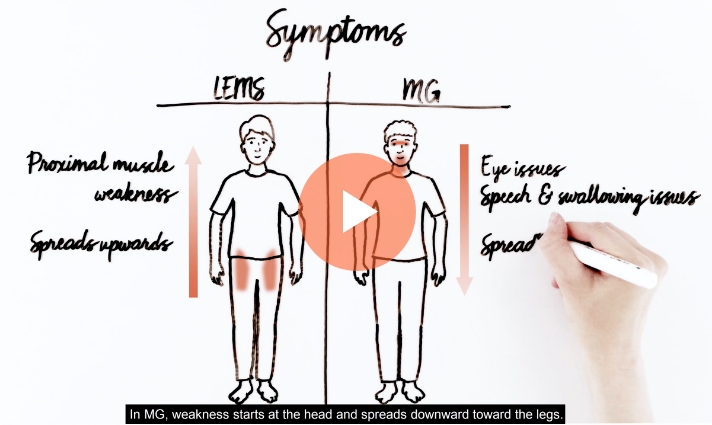
The main symptom of LEMS is muscle weakness, especially in the legs and hips. LEMS can also affect a part of the nervous system that controls basic bodily functions, leading to symptoms such as dry mouth, constipation, dizziness, and erectile dysfunction.
LEMS Symptoms
LEMS symptom map
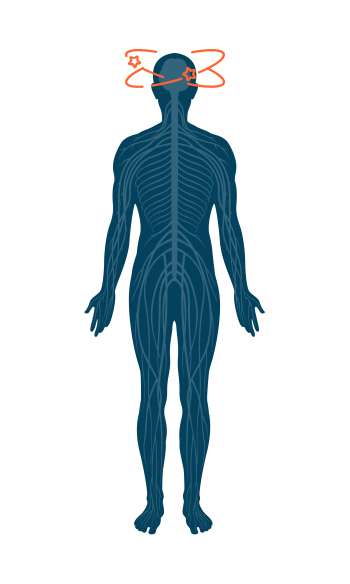
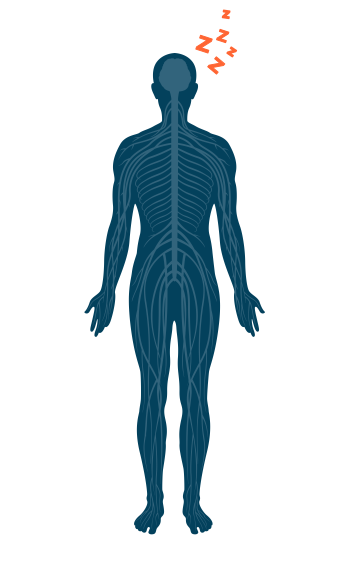
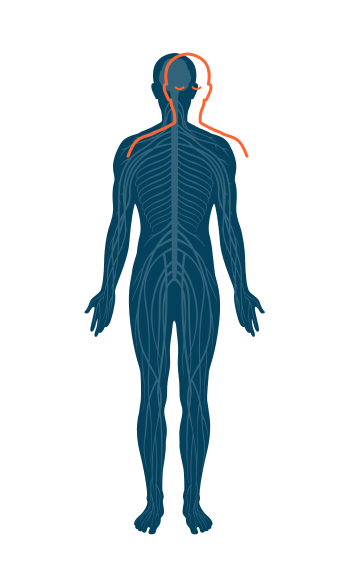
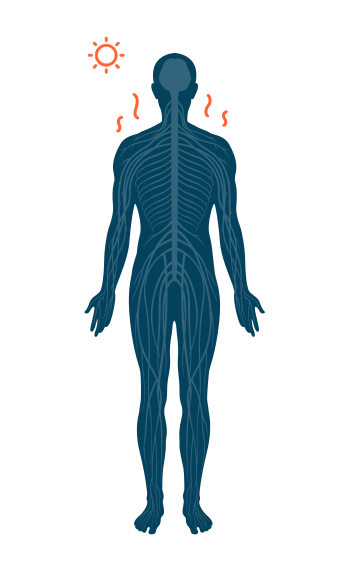
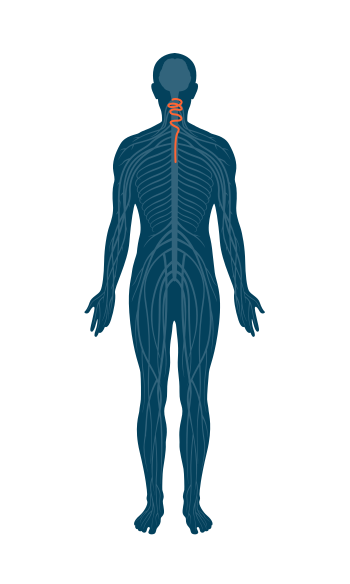
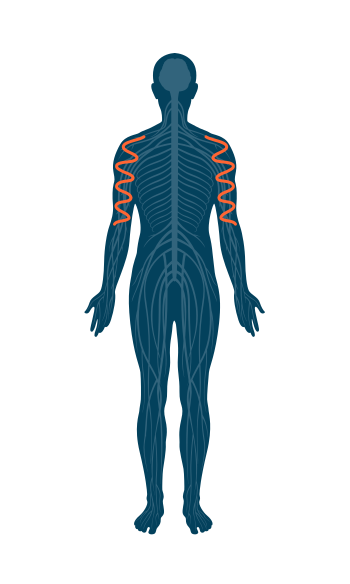
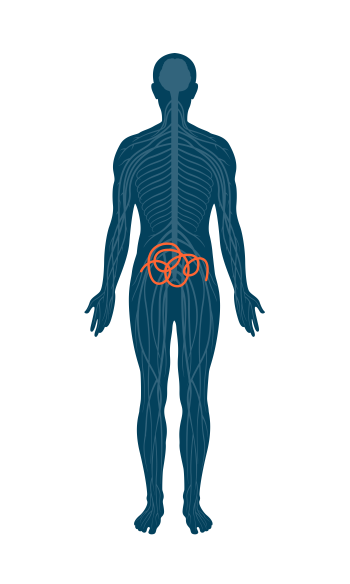
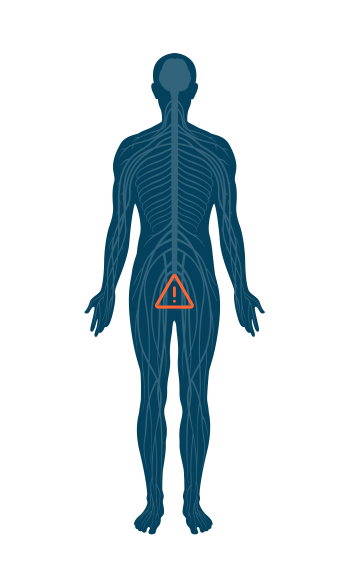
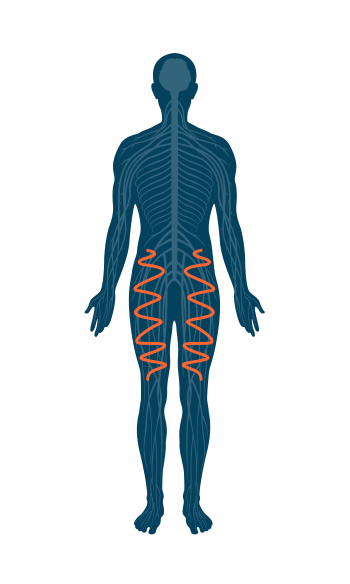
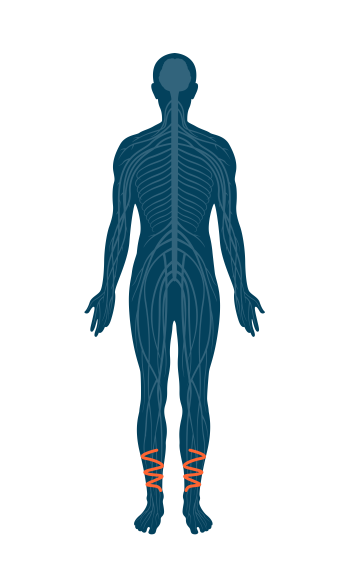
- Dizziness upon standing
- Fatigue
- Drooping eyelids, and/or blurred vision
- Dry mouth, dry eyes, dry skin
- Difficulty swallowing
- Arm weakness
- Constipation
- Erectile dysfunction
- Upper leg weakness
- Lower leg weakness
Another way to recognize the symptoms of LEMS is to be aware of how they may be interfering with your normal activities. Review this list of everyday activities to see how your symptoms may be affecting your daily life.
Everyday activities that I’m finding harder to do

Walking

Climbing or descending stairs

Getting into or out of a car

Reading or focusing eyes

Getting/maintaining an erection

Talking

Chewing

Swallowing

Having a bowel movement

Standing up without
getting dizzy

Raising my arms or lifting
objects

…The next day, i told my husband, i can’t get out of bed.
Signs and symptoms of LEMS
In this video, Desiree describes her journey to an eventual LEMS diagnosis. What started out as severe gastrointestinal issues that required multiple surgeries was soon followed by neurologic events that led to her final diagnosis.
LEMS DIAGNOSTIC CHALLENGES
LEMS is often initially diagnosed as another disorder
If you’ve been researching your symptoms online, you’ve probably discovered that there are other conditions that can cause muscle weakness, such as myasthenia gravis (MG), and can lead to an inaccurate diagnosis the first time a person sees a doctor. As a result, it can take some patients years to receive the correct diagnosis.
The long journey to a diagnosis of LEMS

One study found that it took patients with LEMS an average of
MORE THAN 4 YEARS
to receive a correct diagnosis.


That’s way too long—you’ve got a life to get back to and things to do! That’s why it’s so important to
who knows what to look for.
LEMS is often mistaken for myasthenia gravis (MG)
Like LEMS, MG is a rare neuromuscular disorder that:

Disrupts communication between nerves and muscles

Typically appears during middle adulthood

Causes debilitating muscle weakness

MORE THAN 1/3
of patients with LEMS were first diagnosed with MG.

They told him he had Parkinson’s, MG, MS…it just went on and on for two years.
Phyllis describes her husband Jerry’s long journey to a LEMS diagnosis.
In this video, Phyllis expresses the frustration she and her husband experienced trying to find the right diagnosis for his symptoms.
LEMS and MG share similar signs, but there are several key differences
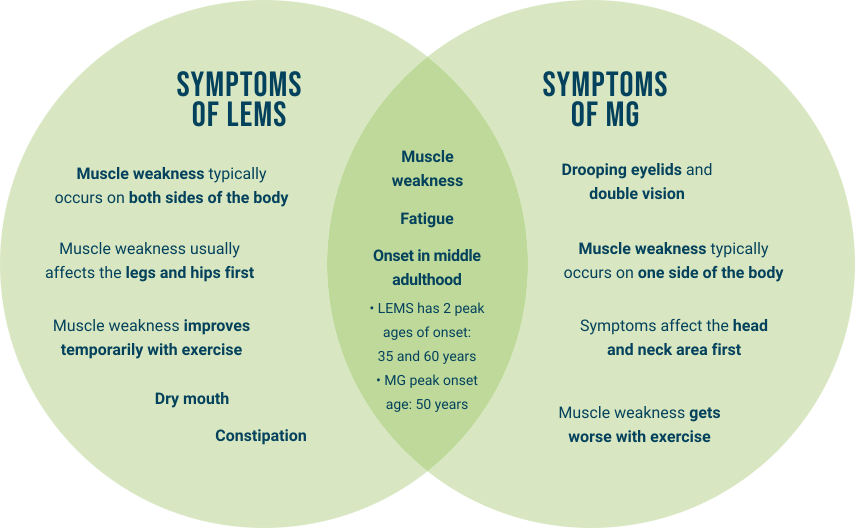
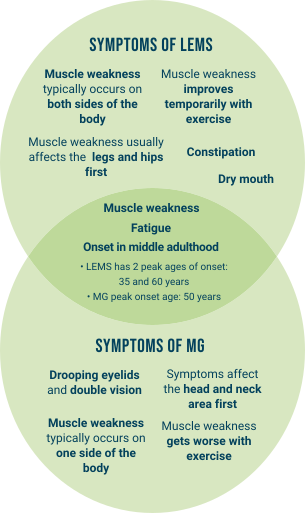
LEMS AND MG:
Knowing the Difference
This animated video illustrates the differences between LEMS and MG, including pathophysiology, symptomatology, and diagnosis.
The role of antibodies in LEMS and MG



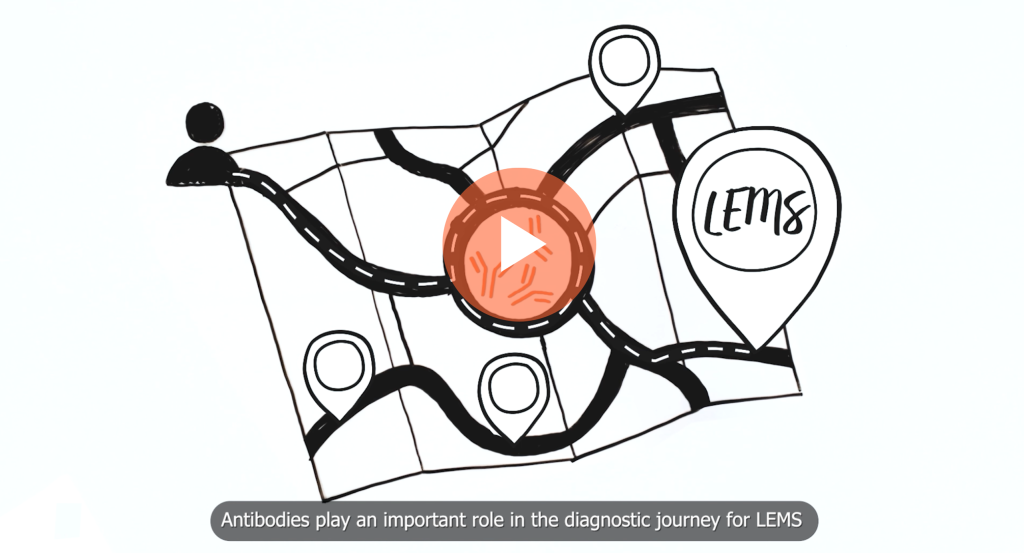
Both LEMS and MG are neuromuscular disorders that occur when the body’s own immune system mistakenly attacks itself, disrupting communication between nerves and muscle. These attacks occur when special proteins called antibodies target the neuromuscular junction (NMJ)the space where nerves and muscles join, resulting in decreased secretion of a neurotransmitter called acetylcholine (ACh). Without enough ACh, signals cannot be transmitted between the nerves and muscles. This disruption keeps the muscles from working properly. It is one of the reasons that LEMS and MG are similar.
But, it is also an important way that your doctor can tell LEMS and MG apart,
because each disorder is caused by different antibodies.
LAMBERT-EATON MYASTHENIC SYNDROME (LEMS): Know Your Antibodies
This animated video illustrates the role of antibodies in LEMS and other neuromuscular conditions that are often confused with LEMS.
LEMS and MG are caused by different antibodies

LEMS is caused by antibodies that target neuronal voltage-gated calcium channels (VGCCs) referred to as VGCC antibodies. These antibodies don’t allow signals to be sent from the nerves to the muscles.


MG, in most cases, is caused by antibodies that target the acetylcholine receptors (AChRs) in the neuromuscular junction, so they are referred to as AChR antibodies. These antibodies don’t allow nerve signals to be received by the muscles.
Your doctor can use a simple blood test to identify whether you have the antibodies associated with LEMS or those associated with MG. Learn more about this test.

LEARN MORE ABOUT THE SIMILARITIES AND DIFFERENCES BETWEEN LEMS AND MG!
To see what sets these two disorders apart, download the “What’s Behind My Symptoms?” infographic.
Take the next step
Talk to a Doctor
If you’re experiencing symptoms of LEMS and haven’t been diagnosed—or you’ve been diagnosed with MG or another disorder but aren’t satisfied with your response to treatment—talk to a doctor. There are physicians who specialize in diagnosing and treating neuromuscular disorders. They can perform the specific tests that can accurately identify what’s causing your symptoms.
Here are 3 more reasons to strongly pursue an accurate diagnosis:

Uncovering hidden cancer
Historically, more than half of LEMS cases are associated with an underlying cancer.
For some patients, LEMS symptoms are an important early warning sign that may help save their lives.

Feeling better
The sooner you know what’s causing your symptoms, the sooner they can be treated. Take your life off PAUSE! Choose to feel better, starting today.

Maintaining strength
While LEMS is a disease that will continue to progress, studies show that following an effective treatment for LEMS can help you maintain your strength and muscle function.
